Tonight, the veil thins.
I’ve known since childhood that the world as we see it is not as it truly is. I was blessed with gifts that showed me what others couldn’t see, that whispered truths the visible world tried to hide. I learned early that what was being presented to me was not the only path forward. That nature held both the masculine and the feminine in perfect balance, and that the divine lived there, not in buildings or dogma, but in the earth, the trees, the endless rhythm of the sea.
This truth was known long before the Abrahamic religions began, before the movement that removed the sacred feminine from the entire equation. But as we see in nature, we cannot separate the feminine and leave her behind, for she is our mother. She is the soil, the harvest, the dark season of rest. She is the cycle itself.
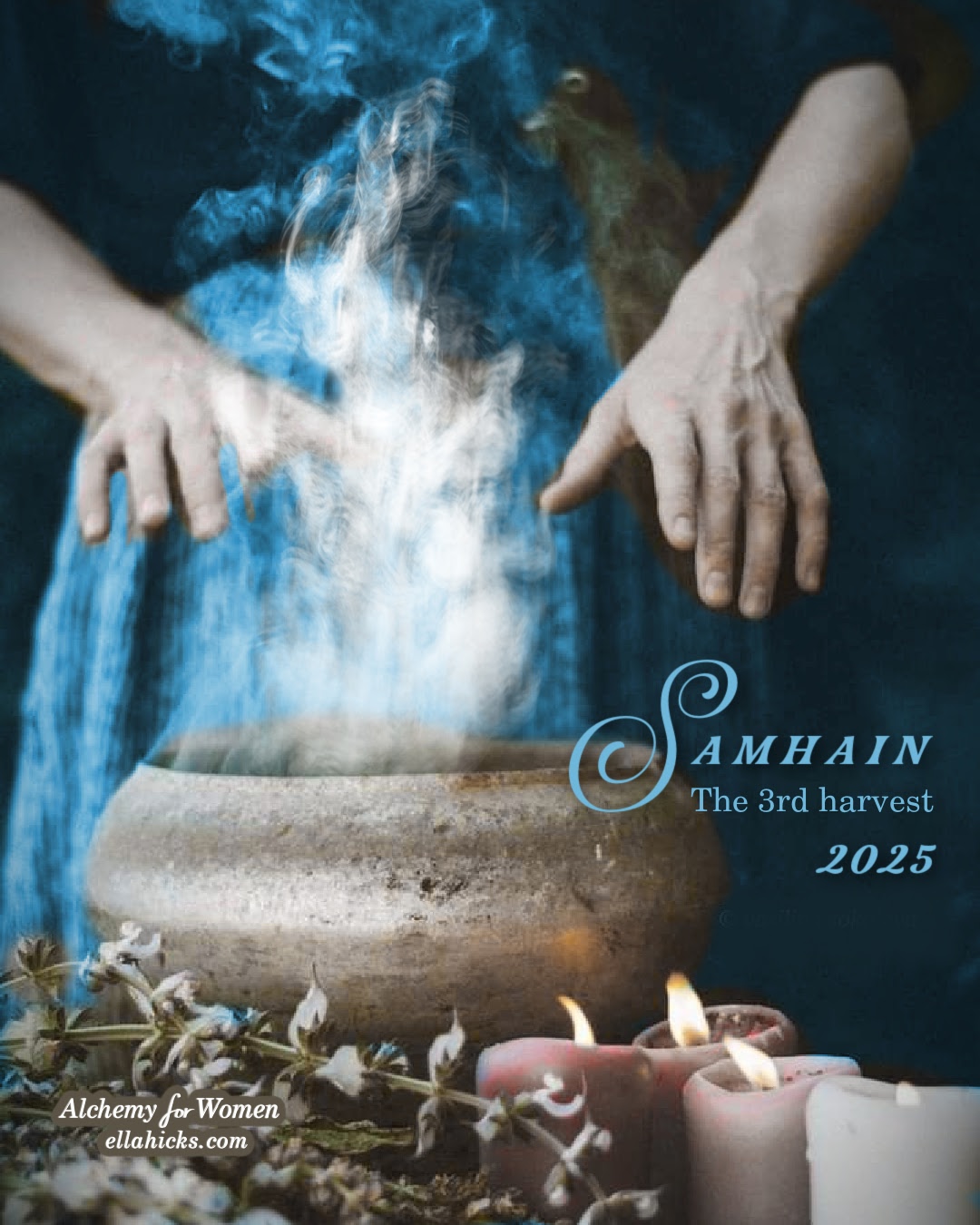
Samhain marks the third and final harvest, and the end of the light half of the year and the beginning of the dark. Not darkness as emptiness, but as the fertile void where all things rest before they’re reborn.
This is the season of going inward. Of letting the external world fall away so we can tend to what lives beneath. The seeds we’ll plant in spring are dreaming themselves into being right now, in the quiet, in the dark, in the unseen places where transformation begins.
Our Celtic ancestors knew this deeply. They marked this threshold as sacred, the turning of the year when the boundary between worlds dissolved. They understood that death and life are not opposites, they’re partners in an endless cycle. That what appears to end is only changing form. That the veil between worlds grows thin not to frighten us, but to remind us: we are never alone.
Those who came before us are still here, walking beside us, whispering guidance through our intuition, our dreams, our inexplicable knowing. I feel them most strongly near the sea, my front yard, my church. The water is a conduit to the divine, and tonight that connection pulses with presence.
Samhain is not about the modern commercial holiday, it’s about memory and continuity. It’s about honoring the dead not as distant figures frozen in time, but as living presences woven into our very being. Their blood runs through our veins. Their resilience lives in our bones. Their unfinished work becomes ours to carry forward.
Tonight, I’ve set an altar to honor this final harvest. Wormwood and mugwort, bay leaf and thyme, rosemary and sage, hibiscus and more. Herbs grown, tended, and gathered with intention. And alongside them, space for my grandmothers, especially those of my maternal line. All the women who came before. All the ones whose names I know and the countless ones I don’t.
We speak their names. We light candles to guide them home. We remember that we are the answered prayers of ancestors who never stopped believing in a future they would never see.
And as we enter the dark half of the year, we do what they taught us: we rest, we reflect, we turn inward. We trust that in the darkness, something new is always being born.
The veil is thin.
The ancestors are close.
And we are exactly where we’re meant to be.
 Rebel Thriver