A mother’s story of survival, healing, and the sacred art of letting go.
As a mother, there’s a quote I’ve clung to for years: “There are two lasting bequests we can give our children. One is roots. The other is wings.” — Hodding Carter Jr.
I’ve thought about those words often, especially this week. My eldest child just moved across the ocean to live in Europe. He has no return date, and his life is now an adventure. The last two days have been filled with pride, excitement, and utter heartbreak. It feels as if he ripped my heart out of my chest and took it with him on that plane.
I have never experienced this depth of emotion. It hit me like a wave, and tears that couldn’t flow for decades have finally been unleashed. It’s the ache only a mother can understand. There is a strange paradox of wanting your child to soar, even as every part of you wants to keep them close.
But this isn’t just any story about a child leaving home. Raising a child in abuse is very different from raising a child in safety. You are not just parenting, you are surviving. You are trying to keep both of you alive.
In our case, we had to flee, disappear, and assume new identities, not once, but twice. Staying alive means staying out of the never ending hunt. There were years of fear, exhaustion, and the constant weight of looking over our shoulders. It wasn’t the childhood I wanted for my children, but it was the only way to keep them safe. Safe meant they were alive.
And yet, in spite of all of it, my son has become everything I hoped for and more. He is the best of me walking around in size 11 shoes — kind, curious, creative, and whole. Proof that healing can take root even in depleted soil. We didn’t just survive; we grew wings.
When you raise a child in trauma, you learn that love is only half the battle. Healing is the rest. Our children don’t just learn from our words, they absorb our energy. Their nervous systems regulate by watching ours. The most powerful gift you can ever give them isn’t perfection; it’s your own healing.
So to every mother still fighting to raise children while healing herself: keep going. I know how hard it is to hold their pain and your own at once. But your courage becomes their compass. Your resilience becomes their road map home. Trust that, in the end, your children will rise next to you.
Today, I share this hope with you because I am living this truth, and it is certainly something to celebrate.
The hidden truths of domestic violence and the cost of silence.
Abusers don’t arrive with warning labels. No red horns. No cape. They come disguised as everything you thought you ever wanted. That is the hardest truth about domestic abuse. It does not announce itself. It hides in kindness, in charm, in morality — in the very qualities that make outsiders admire them while the victim begins to doubt herself.
At first it feels intoxicating. A flood of late night love messages. Constant attention. Lavish gifts. Promises of the future you once dreamed of. All of it becomes a blinder to the truth. These relationships often get serious very quickly, making it nearly impossible to hold onto healthy boundaries. The abuser studies what you need and feeds it back to you as confirmation. This has a name: love bombing.
It looks like generosity and grand gestures before trust has had time to grow. It sounds like forever talk from someone you barely know. Your nervous system reads the intensity as safety because acceptance like this can feel like home. You feel seen, heard, and held — possibly for the first time in your life. That is what makes it so powerful. But it is not love. It is conditioning. It is bait in the trap.
Once the hook is in, the mask begins to slip. Control creeps in quietly at first. A jealous comment disguised as concern. A demand dressed up as protection. The cycle of abuse has begun, and it follows a pattern so many survivors come to know: tension, explosion, honeymoon.
Tension builds in small, relentless ways. Criticism. The silent treatment. The constant need to walk on eggshells to ward off the inevitable. Your body learns to scan for danger in every word and gesture. Then the explosion comes. It may be a night of insults meant to strip your worth. It may be a shove, a slap, or worse. Whatever form it takes, the explosion is designed to catch you off guard and break you down.
And then, the honeymoon. Apologies. Tears. Promises of change. Begging. The relief is palpable. For a moment, you want to believe he can return to the man you first met. This rhythm is deliberate. It conditions your nervous system to live in hyper vigilance while clinging to the rare scraps of kindness. The cycle itself becomes a cage — one built not of bars, but of hope. And hope is what keeps you tethered to the source of harm.
Living inside this cycle of emotional upheaval rewires the body. The nervous system is built to protect us, but when it is forced to stay on constant high alert, it becomes dysregulated. Your body forgets how to return to a baseline of calm. The heart begins to pound without understanding the trigger. Every creak in the floorboards feels like a warning. The body braces for blows that may never come. Sleep is fractured. Even silence begins to sound like danger.
Over time, the flood of stress hormones carves new neural pathways in the brain, and survival becomes the body’s only language. The chemistry of abuse begins to mimic the chemistry of addiction.
This is why survivors often describe the bond with an abuser as impossible to break. The body craves not the abuse itself, but the temporary relief that comes in the honeymoon phase. Like a drug, it offers a rush of dopamine that feels like intense relief after deprivation. That craving is not a weakness. It is the body trying to make sense of chaos. It is biology responding exactly as it has been trained to do.
Even after escape, the damage does not simply reset. Recovery from domestic abuse is not a single event. It is a process as complex as substance recovery — with its own withdrawals, its own triggers, and the slow, patient work of teaching the body how to feel safe again.
The emotional, physical, and psychological toll does not stop with her. A mother who lives in constant fear can’t help but pass that fear to her children. When her nervous system is on high alert, theirs will be too. Babies learn safety through their mother’s gaze. The tone of her voice. The rhythm of her breath. When those cues are disrupted by abuse, a child’s sense of self and safety is shaken. They grow in sandy soil. Soil that never stops shifting.
A child who can’t trust the world to be safe cannot thrive. Instead, they adapt. Some withdraw into silence. Some lash out in anger. Some learn to tiptoe the same way their mother tiptoes, measuring every word against the possibility of eruption. Abuse fractures families. It teaches even the smallest ones to live in survival mode. To please. To disappear. This is the generational ripple of trauma from domestic violence. It does not stay contained in one person. It alters nervous systems. It shapes futures. It plants fear where the roots of safety should have been.
“Why doesn’t she just leave?”
This is the question asked most often, and it is the one that cuts the deepest. In simple terms, it is ignorance. It places the burden on the victim instead of the abuser, as though leaving were simple, as though safety were waiting just outside the door. But leaving is never simple. In fact, it is the most lethal time in an abusive relationship. Not only do women lose their lives inside abuse, but many lose them in the desperate attempt to escape it.
And for the record, women do try to leave. On average, it takes eight or nine attempts before she finds her way out—if she is so lucky. A trauma bond is a very real psychological phenomenon. The nervous system, conditioned by cycles of abuse and reconciliation, clings to the hope of the honeymoon phase the way an addict clings to the next fix. Add to that the threats of poverty, homelessness, losing children, or retaliation, and the so-called “choice” to leave becomes a dark labyrinth that feels impossible to even try to navigate.
For mothers, every step is measured not only for herself but for the children she must protect. Can you imagine anything more terrifying than trying to escape with small children? Now imagine what happens when they are caught.
So when someone asks, “Why didn’t she just leave?” the only answer is that she was already surviving in the most impossible circumstances. And even when she does leave, the story does not end. Abuse has a long reach. It does not vanish when the door slams shut or when divorce papers are signed. In fact, many women discover a whole new layer of danger after they leave. It has a name: post-separation abuse. The threats, the stalking, the attempts to control through the children or the courts — all of it is part of the same cycle of abuse. Leaving does not guarantee safety. For many, it is just the beginning of another phase of survival.
Post-separation abuse is devastating not only because of the external threats but because of what is happening inside her body. A nervous system that has lived in chaos does not know how to return to calm. Even when the abuser is gone, her body keeps waiting for the next explosion. Sleep is fractured. Trust feels impossible. Even joy can feel unsafe.
Recovering from domestic abuse mirrors recovery from addiction. The body craves what it has been trained to expect, not the violence itself, but the fleeting relief that comes in the honeymoon phase. That moment of forgiveness or reconciliation is like a hit of dopamine, a temporary high after deprivation. The brain learns to chase it long after the relationship is over. This is not a weakness. It is human neurobiology. Trauma carves its pathways deep, and healing requires rewiring them, step by fragile step.
This is why recovery is not an event but a process. It carries withdrawals, triggers, and the slow, patient work of teaching the body how to feel safe again. Without support, the risk of returning to the abuser or finding herself in another abusive relationship remains painfully high. Safety is not just leaving. Safety is learning how to live again.
Domestic violence is endemic. One in three women will experience it in her lifetime, and that number only reflects those who report. Most never do. Abuse thrives in silence. It thrives in a patriarchal culture that still tells women to sit down and be quiet, to endure, to forgive. A culture that insists the highest compliment a woman can earn is to be selfless.
Abuse thrives when neighbors hear the screams and turn up the television. It thrives when the justice system minimizes abuse (“just a little fight with the wife”), when funding for shelters is slashed, when headlines sensationalize the tragedy but ignore the pattern.
When an extreme case makes the news, people become outraged, but within days the outrage fades. The world forgets. Survivors do not have that luxury. Every silenced woman, every child who grows up afraid, carries the weight of that forgetting. Silence protects the abuser. Silence ensures the cycle continues. We cannot afford to look away. Domestic violence is not contained behind closed doors. It is a collective wound that touches every community and every generation.
Elie Wiesel, a Holocaust survivor, carried the memory of what happens when the world stays silent. His words were born of a greater atrocity, but they hold true here: “Neutrality helps the oppressor, never the victim. Silence encourages the tormentor, never the tormented.”
What do survivors need from us?
They need us to stand with them. To speak. To donate. To advocate. To hold space for the women who are still trapped inside it, for those clawing their way out, and for those trying to rebuild a life from the floor up. Survival is solitary, but healing is collective. Together we can break the silence. Together we can dismantle the systems that embolden abusers. Together we can show every survivor that she has worth.
Not everyone will understand what you’ve survived. They didn’t see the fear, the shame, or the breaking down that brought you to your knees under a moonless night.
They don’t know what it felt like to live inside the storm, or the way your body remembers what your voice could not say. They didn’t feel the weight of silence pressing against your chest, or the courage it took just to keep breathing when you wanted to disappear.
Survival Leaves No Witnesses
The hardest truth about surviving is that it often leaves no witnesses. To the outside world, you may look “fine.” You may even look “strong.” But the fragments you carried in secret tell another story.
It’s the story of a woman who stitched herself back together with trembling hands and invisible thread. The story of someone who learned to move through life while holding the rubble of her former world in her palms.
And because they didn’t see that journey, they may never understand the cost of your healing.
Healing Is Not Meant to Be Understood by Everyone
Here’s what I need you to know: your metamorphosis is sacred.
It is not for their approval. It is not for their comprehension.
You don’t owe anyone an explanation. You don’t exist to convince them that your story is real. You are not required to shrink your truth so they can be comfortable.
Your healing is not theirs to measure. It is yours to claim.
Becoming
Healing is not about returning to who you once were. It’s about rebirthing yourself into the woman you were always meant to be— the one who lived inside you before the world tried to silence her, before the shame, the fear, the breaking down.
You are not broken. You are becoming. You are unbecoming everything the world told you to be so you can finally rise into everything you are.
A Final Word
If you feel misunderstood, unseen, or dismissed on your healing journey, remember this: you’re not here to convince them.
You’re here to live fully. To stand in your sovereignty. To honor the sacred work you’ve done.
Because your metamorphosis is not small. It is sacred.
Protect it. Honor it. And never forget— you don’t owe anyone an explanation for your survival, your becoming, or your light.
“I have done nothing all summer but to wait for myself to be myself again.” — Georgia O’Keeffe
As this season draws to a close, I find myself reflecting on the power of waiting. I think about how healing often unfolds in silence. It happens in slowness and unseen places. What follows is not an explanation or a roadmap, but a prayer I needed to write for myself.
I. The Courage to Wait
There is a wisdom in waiting that our culture does not honor. We live in a world obsessed with productivity, speed, and achievement. Rest is mistaken for laziness, and silence is confused with absence.
All summer, I waited. For the quiet to soften me. For the storms inside to pass. For the woman I lost along the way to rise and meet me again.
And she is coming— slowly, fiercely, wholly— like a wildflower breaking through stone, like the horizon pulling light back into itself.
This is what healing often asks of us: to trust the invisible underground work, and the gestation that can’t be hurried. Seeds must split in the dark before they bloom in the light. Similarly, we must surrender to seasons of waiting. Only then can we rise whole again.
II. The Feminine Rhythm
In the feminine soul, healing does not move in straight lines. It circles and spirals. It withdraws before it returns. It rests before it creates.
This rhythm is not weakness—it is ancient wisdom. The body knows how to heal. The spirit knows how to return. Our task is not to force it, but to allow it. To trust that our becoming is not delayed; it is ripening.
III. The Dawn Always Comes
We don’t always heal by doing more. Sometimes we heal by waiting. By letting silence do its work. By trusting that the parts of us we thought were gone are only gathering strength to return.
If you’ve been waiting for yourself, know this: she is still here. She is still coming back.
And when she rises, it will be with roots deeper, branches stronger, and a light no storm can take away.
When I first heard the title, Dying for Sex (Hulu), I assumed I knew what I was walking into. Something provocative. Maybe irreverent. At best, an exploration of pleasure at the edge of mortality. But what I found was something far more sacred—a story of childhood sexual abuse, disconnection from the body, friendship that becomes a lifeline, and one woman’s wild, awkward, holy attempt to reclaim herself before the clock ran out.
This isn’t a story about sex. It’s a story about survival, intimacy, friendship, and the long, complicated journey of coming home to yourself.
I didn’t expect to be gutted by a show called Dying for Sex, but I was. The truth is, it wasn’t about sex. Not really. “Molly’s” story is one woman’s true story about living—and dying—with cancer.
Molly’s breast cancer had gone into remission, but ultimately, it returned. It had spread to her bones, liver, and brain. Stage IV. Terminal. She had been married for 13 years at this point. Her husband loved her, but had begun to see her only through the lens of a caretaker. He couldn’t fully see the woman she still was—a woman who craved not just safety, but desire. So she left him.
What she longed for was true embodiment in the presence of another. To be met without flinching. Without pity. Without being reduced to her illness or her past. Her treatment regimen had an unexpected side effect: it drastically increased her libido. But she wasn’t dying for sex—she was dying for safety, for intimacy, for a chance to feel something she’d been denied her whole life: real connection, acceptance, and love.
One of the main threads running through her story is the abuse she endured at age seven by her mother’s boyfriend. The wounds of sexual abuse don’t just fade—they shape-shift. Into shame. Into silence. Into a lifelong negotiation between your mind, your body, and your self-worth.
That guilt is heavy. And Molly carried it. Survivors know it well—the lie that you “participated.” That you could’ve stopped it. That your body’s response made you complicit. It’s a wound that defies logic. It damages not only your relationship with yourself, but also with the people you love—like her mother.
Molly’s story isn’t just bold—it’s legendary. She didn’t heal in the traditional sense. She didn’t transcend her pain. But she made room for herself inside it. For survivors like me—and like so many of us—that kind of reclamation is holy. Because in the middle of breaking down, she broke open. And in the shadow of death, she was reborn.
What makes her story even more powerful is her willingness to keep reaching across the divide. In time, she made peace—not just with her past, but with her mother. Not through a grand reconciliation, but through a series of quiet understandings. As she forgave herself, space opened to see her mother not only as someone who failed her, but as a woman shaped by her own silences and fears.
Forgiveness didn’t mean forgetting. It meant loosening pain’s grip. Releasing the knot in her chest so she could breathe again. Love again. Live out what was left of her life in peace.
Molly’s healing wasn’t about sex. It was about finding herself in the wreckage of a childhood where her body became a battleground and trust became collateral damage.
I know the stranglehold of that trauma personally. It doesn’t just haunt your memories—it hijacks your body, your sense of self, your relationships. Decades later, it can show up in the most intimate places where trust should live, but fear has built its home.
Through all of this—her unraveling, her ache, her awkward fumbling toward connection—there was Nikki. Her best friend and anchor. The mirror without judgment. The witness who didn’t try to fix her. When Molly asked, “Can I die with you?” I wept. That’s the power of sisterhood.
True sisterhood is sacred. It says: You don’t have to do this alone. I’ve got you—through the dying of old selves, old beliefs, and lifelong shame. That kind of friendship is church. It’s resurrection. It’s medicine.
Nikki didn’t just show up—she stayed. Through the awkwardness. The unraveling. The raw truths. She bore witness. She didn’t flinch. She didn’t rush. She held space, even when it felt impossible.
That’s what sisterhood looks like. Not performance, but presence. A hand held while you fall apart. A mirror that reminds you who you are when you can’t see clearly.
Molly’s bravery was hers. But Nikki’s presence made it possible. That kind of unwavering friendship doesn’t just support healing—it is healing. In a world where survivors are often invisible, to be truly seen by another woman—without judgment, without shame—is a lifeline. A return to self.
Molly’s story isn’t tidy. It’s raw and at times absurd—just like life. Healing is rarely elegant, and that’s the beauty of this story. Molly didn’t wait to be polished. She stepped toward truth—messy as it was—and made it hers.
For those of us haunted by our past, disconnected from our bodies, desperate to come home to ourselves, Dying for Sex is more than a story. It’s a map. Not a perfect one. But a courageous, deeply human one. At its heart? A woman who dared to return to herself before her body gave out.
And she didn’t return to emptiness. She returned to wholeness. In the end, Molly found what she was searching for: love, safety, and a real, embodied connection—with herself, and with someone else.
Healing didn’t erase the past. But it opened a door to a future she never believed she could touch.
Not perfect. Not painless. But real. And all hers.
May we all be that brave. May we all have a Nikki.
For so many of us—especially those whose bodies were never safe places to live—healing is not linear. It’s messy. And sometimes, life gives you a deadline.
Dying for Sex reminds us that it’s never too late. To reach for yourself. To speak the truth. To be witnessed in your rawest humanity.
Even in the unraveling—you are worthy. Of love. Of friendship. Of being held.
Coming home to yourself, no matter how long it takes, is the bravest journey of all.
Trauma leaves lasting imprints on our lives, shaping how we see the world, others, and ourselves. The aftermath can feel overwhelming, as if we are left picking up the pieces of a life we no longer recognize. But within the wreckage, growth is possible.
Post-traumatic growth is the process by which survivors not only heal but transform, discovering new strengths, perspectives, and opportunities they may never have considered before. It is not about erasing pain, but about finding meaning beyond it—emerging from the shadows with a renewed sense of self.
The Hidden Strength Within Trauma
At first, survival is the only focus. The body and mind work to process the shock, the loss, the enormity of what has happened. But over time, survivors may notice something new stirring within them—a strength they never knew they had.
Resilience takes root. The realization dawns: I made it through. The challenges that once seemed insurmountable now serve as proof of inner strength.
Life feels more precious. Trauma often shifts our perspective, deepening our appreciation for what truly matters—love, presence, connection.
New doors open. What once felt limiting no longer holds power. Survivors may explore new paths, careers, hobbies, or passions.
Relationships evolve. Adversity fosters empathy and deeper connections, helping survivors build meaningful relationships rooted in authenticity and trust.
Spirituality shifts. Whether through faith, personal reflection, or connection with nature, many find themselves searching for—and often discovering—new meaning in life.
Yet, recognizing this growth is not always easy. Moving forward takes time, intention, and the right tools.
Steps Toward Growth After Trauma
Though each survivor’s path is unique, there are common ways to nurture personal growth in the wake of trauma.
Mindfulness and Breathwork – Practices like meditation, deep breathing, and yoga can help regulate emotions and bring awareness to the present moment.
Self-Compassion – Healing requires patience. Treating ourselves with the same kindness we would offer a loved one allows for deeper emotional recovery.
Creative Expression – Writing, painting, music, and other creative outlets provide ways to process emotions that words alone may not capture.
Nature and Grounding Practices – Spending time outdoors, walking barefoot on the earth, or simply feeling the warmth of the sun can be profoundly healing.
Therapeutic Support – Trauma-focused therapy, cognitive behavioral techniques, and body-based approaches like trauma-sensitive yoga help survivors process and move through pain.
Building Connection – Seeking support from trusted friends, family, or survivor communities can reduce isolation and provide validation.
Reframing the Narrative – Growth often comes from seeing trauma not as an ending but as a transformation—an opportunity to redefine priorities and reclaim personal power.
The Journey is Yours
Healing is not about returning to who we were before trauma. It is about becoming someone new—someone who carries their past with wisdom, not weight.
Post-traumatic growth does not mean we forget the darkness, nor does it mean we are grateful for the pain. But it does mean that in the process of healing, we can find strength, purpose, and the courage to emerge from the shadows—free, untethered, and fully alive.
Emerging from Trauma: The Power of Post-Traumatic Growth
Trauma leaves lasting imprints on our lives, shaping how we see the world, others, and ourselves. The aftermath can feel overwhelming, as if we are left picking up the pieces of a life we no longer recognize. But within the wreckage, growth is possible.
Post-traumatic growth is the process by which survivors not only heal but transform, discovering new strengths, perspectives, and opportunities they may never have considered before. It is not about erasing pain, but about finding meaning beyond it—emerging from the shadows with a renewed sense of self.
The Hidden Strength Within Trauma
At first, survival is the only focus. The body and mind work to process the shock, the loss, the enormity of what has happened. But over time, survivors may notice something new stirring within them—a strength they never knew they had.
Resilience takes root. The realization dawns: I made it through. The challenges that once seemed insurmountable now serve as proof of inner strength.
Life feels more precious. Trauma often shifts our perspective, deepening our appreciation for what truly matters—love, presence, connection.
New doors open. What once felt limiting no longer holds power. Survivors may explore new paths, careers, hobbies, or passions.
Relationships evolve. Adversity fosters empathy and deeper connections, helping survivors build meaningful relationships rooted in authenticity and trust.
Spirituality shifts. Whether through faith, personal reflection, or connection with nature, many find themselves searching for—and often discovering—new meaning in life.
Yet, recognizing this growth is not always easy. Moving forward takes time, intention, and the right tools.
Steps Toward Growth After Trauma
Though each survivor’s path is unique, there are common ways to nurture personal growth in the wake of trauma.
Mindfulness and Breathwork – Practices like meditation, deep breathing, and yoga can help regulate emotions and bring awareness to the present moment.
Self-Compassion – Healing requires patience. Treating ourselves with the same kindness we would offer a loved one allows for deeper emotional recovery.
Creative Expression – Writing, painting, music, and other creative outlets provide ways to process emotions that words alone may not capture.
Nature and Grounding Practices – Spending time outdoors, walking barefoot on the earth, or simply feeling the warmth of the sun can be profoundly healing.
Therapeutic Support – Trauma-focused therapy, cognitive behavioral techniques, and body-based approaches like trauma-sensitive yoga help survivors process and move through pain.
Building Connection – Seeking support from trusted friends, family, or survivor communities can reduce isolation and provide validation.
Reframing the Narrative – Growth often comes from seeing trauma not as an ending but as a transformation—an opportunity to redefine priorities and reclaim personal power.
The Journey is Yours
Healing is not about returning to who we were before trauma. It is about becoming someone new—someone who carries their past with wisdom, not weight.
Post-traumatic growth does not mean we forget the darkness, nor does it mean we are grateful for the pain. But it does mean that in the process of healing, we can find strength, purpose, and the courage to emerge from the shadows—free, untethered, and fully alive.
When I see women stepping away (decentering) from the patriarchy or millennials distancing themselves from their parents, I recognize the same thing happening: a powerful, quiet shift that says, “Please, treat me like a human. I’m done carrying the emotional weight for a connection when you won’t show up in ways that respect me.” It’s happening in romantic relationships, and it’s happening within families. One person is trying to dominate the other, and the other is saying, “No more.”
This shift is not just about distancing; it’s about reclaiming our right to be seen and respected as equals. It’s about recognizing that relationships, whether romantic or familial, must be built on mutual respect, not power struggles. If you want a real connection with me, there are no power dynamics at play. We show up with joy, a willingness to understand each other, and a shared love. Our feelings matter—whether we agree or disagree. No one gets to control another person’s time, space, or emotions.
I choose when I give access to myself, moment by moment. No one is entitled to it just because of who they are to me. This is the basic foundation for healthy, authentic relationships. But trauma makes these boundaries hard to honor. When we’re disconnected from ourselves—emotionally and physically—we can’t fully connect with others. And so, we resort to unhealthy ways of holding on—through loyalty or financial control, things that mask the real work of connection.
Healing begins when you reclaim your own identity. When you are honest with yourself, trust yourself, feel your emotions, and take care of yourself as an adult, you begin the process of building a personal foundation that is unshakeable.
The generations that came before us dealt with a lot of dysfunction, power struggles, and a loss of autonomy (especially for women). Abuse was accepted for women and children, at home, school, and the workplace. And one thing our world has never been in short supply of is war. Generations of men (and women) went to war, returned broken, and passed down their pain. That trauma lingers, shaping how we relate to one another.
It doesn’t take a massive event to cause trauma. In fact, trauma isn’t something that happens to you—it’s how your nervous system processes a traumatic event. Sometimes, it’s the smallest moments that leave the deepest marks, especially for children. But healing is possible, and it’s necessary. We are at a time where healing is essential to how we show up in our relationships. We can no longer build connections in the absence of boundaries. We have to heal to truly relate—and it starts with healing what was broken.
My Personal Insight: A Legacy of Healing
Raising my sons has been one of my greatest acts of healing. I’ve spent much of my life breaking free from the patterns I inherited from my parents—many of which they inherited from their own parents. My father, who I know loves me, is controlling and emotionally distant. My mother, though loving, has been subjugated to him my entire life. When I married at the age of 28, my partner brought his own history of intense trauma into our relationship, ultimately trying to control and diminish me.
I had to unlearn everything I was taught, not just for my own sake, but for my children as well.
I never wanted my sons to experience the same cycle of power and control that I did. I was determined to break the cycle and protect them from that. But healing is not something that happens overnight. It’s been an intense process, and I’ve learned that this journey of healing is just as much for them as it is for me.
My own healing only truly began after I escaped my abusive marriage. It has taken time—years, in fact—for me to identify the patterns of dysfunction I was caught in—and I’m still healing. I know that my trauma—the way I was raised and the relationships I’ve had—has shaped my responses and my approach to raising them. I don’t want our home to feel rigid or oppressive, so I’ve tried to create a space where they can heal themselves, without pressure or judgment. Even though I tried to protect them from the trauma I experienced, they still felt its echoes. Perhaps they wonder why I reacted in certain ways or why some patterns feel familiar. They too carry their own trauma—different from each other, stemming from their time with their abusive father. These wounds run deep within them, and only they can bring them into the light, where healing can begin.
In the absence of a father, my sons have gotten to know my father, their only grandfather, very well. A good man with many strengths, but he was raised in a time and in ways that didn’t allow him to be emotionally available or aware. The trauma he experienced carried over into his relationship with me, and in turn, it affected how I was able to show up for them at times. This legacy is real, and recognizing it is the first step to healing. Watching my mother become subservient to him and their religious dogma only deepened the dysfunction. This was her story, passed down from her mother: a man ruling over a woman—unhappy and unfulfilled—looking for escape or a better way. Even though I rejected and hated what I saw growing up, it still felt familiar when I met the man who would become my husband. That’s what happens with trauma—it feels like home, even when it’s unhealthy. It’s not a comfort, but a deep-seated familiarity that can be hard to shake, even when it’s harmful.
I understand that trauma can feel like a bond, even if it’s destructive, and it’s hard to break free from that. It is rooted in generations past and it lives in our very bones and flows in our blood. This is why it’s so important to see how dominance in relationships operates. It’s not always loud or violent, and it doesn’t always look like someone who is just too controlling or manipulative. We may interpret it as “care” or “concern,” but it’s really about control. Whether it’s a parent controlling who you see, where you go, who you worship, how you think, or a partner making you feel less than, it all comes from the same place: fear and control.
I’ve been a devoted student on my journey of healing, not just for me, but for them. I want my sons to know that they have the power to do the same. They are not bound by the patterns of the past. They are capable of building relationships based on love, equality, and understanding. They are worthy of all the love that comes from a place of respect—not control—and they must offer the same to others worthy of them. I can guide them, but the work of healing belongs to them alone. I’ll always be here to walk beside them, but the real journey is theirs to take.
A pivotal piece of writing that has helped guide my parenting, more than almost anything else, is by Khalil Gibran, On Children:
“Your children are not your children. They are the sons and daughters of Life’s longing for itself. They come through you but not from you, And though they are with you yet they belong not to you. You may give them your love but not your thoughts, For they have their own thoughts. You may house their bodies but not their souls, For their souls dwell in the house of tomorrow, which you cannot visit, not even in your dreams. You may strive to be like them, but seek not to make them like you. For life goes not backward nor tarries with yesterday. You are the bows from which your children as living arrows are sent forth. The archer sees the mark upon the path of the infinite, and He bends you with His might that His arrows may go swift and far. Let your bending in the archer’s hand be for gladness; For even as He loves the arrow that flies, so He loves also the bow that is stable.”
When they enter future relationships, I hope they do so with the wisdom of knowing that love is never about control. It’s about two people coming together with respect and shared growth.
Another piece by Gibran that has guided me in my own life is, On Marriage:
“…let there be spaces in your togetherness, And let the winds of the heavens dance between you. Love one another, but make not a bond of love: Let it rather be a moving sea between the shores of your souls. Fill each other’s cup but drink not from one cup. Give one another of your bread but eat not from the same loaf. Sing and dance together and be joyous, but let each one of you be alone, Even as the strings of a lute are alone though they quiver with the same music. Give your hearts, but not into each other’s keeping. For only the hand of Life can contain your hearts. And stand together yet not too near together: For the pillars of the temple stand apart, And the oak tree and the cypress grow not in each other’s shadow.”
Ultimately, as they heal, so too will the world around them. Their healing is not just for their own sake; it has the power to shift the very fabric of their relationships, their communities, and future generations. By doing the work to heal, they will light the path for others to follow. They have the power to change the course of their lives—and in doing so, help heal the world.
Survivors of complex trauma, such as domestic abuse, have a lot to learn about what’s happened to their brains and nervous systems in order to understand what it is that they are trying to heal. The study of trauma is relatively new. It was only in 1980 that the American Psychology Association added PTSD to the DSM-3 (the guide for medical diagnosis), and then it was mainly applied to veterans who up until now were considered to have “shellshock”. In 2014, after 32 years of studying trauma, Dr. Bessel van der Kolk wrote, The Body Keeps the Score, which has had an enormous impact at how we look at trauma. It is now on the New York Times Bestseller list for the last 96 consecutive weeks. It’s interesting that a book about trauma is on the bestsellers list isn’t it? We are collectively becoming aware of the effects of trauma on the neurobiology of the brain.
When something triggers us (known or unknown), our Amygdala (part of brain responsible for emotions), acts as the “smoke detector” so to speak. It warns us of a threat, and it sets off a chain reaction in our body/brain that leads us into fight, flight, or freeze. This is a trauma response. What happens next is that we react, but without the help of our frontal lobe (behind your forehead) which is our thinking brain (reasoning, problem solving, verbal expression, memory of events, and facts). Instead, we react with our Reptilian Brain (brainstem is at the base of the head/neck) which is non-thinking, but rather instinctive. This is when we often feel that adrenaline dump (adrenaline increases your heart rate, elevates your blood pressure, and boosts energy supplies).
When we have a trauma response we react without the help of our “thinking brain’. This is the hard part about trauma, we cannot think our way through a response because our prefrontal cortex goes “off line” and as a result you cannot ‘talk’ your way to healing. You CAN however practice new ways to respond. The brain is amazing and has neuroplasticity*, which means that it can create new neural pathways, and thus new habits.
This is what works for me and for many others. It’s called box breathing.
Inhale deeply and slowly for 4 seconds (can do 5 or 6 seconds if you prefer). Hold breath for 4 seconds. Slowly exhale your breath for 4 seconds. Rest for 4 seconds. Repeat.
This can become your default setting when you become triggered, but you need to practice it in order for it to become a habit. Start out doing a series of 4 deep breath cycles, 3 times a day. I took it a little further…everytime I hit a red light I would practice box breathing. Everytime the phone rang I would practice…..so forth and so on. I can’t say exactly how long it took, but my body started to automatically switch to box breathing when something triggered me. When my body automatically switches into box breathing mode, my mind is able to address what is happening sooner. It is then that I start saying to myself “It’s okay. You are okay. You are safe.” This has really helped me more than anything else.
For those of us with severe post traumatic stress (CPTSD) things can get better, but that won’t happen by just giving it ‘time’ or through talk therapy. You must take an active role in your healing. The above may sound complicated, but it’s really not. The abuse I endured was intense and my body skips fright or flight, and goes directly into freeze mode. My first response always is to stop breathing when I am triggered, which of course makes it even worse. Box breathing has given me a sense of control back, and I cannot express how life changing this can be. When you begin to heal you may feel that you are trapped within yourself by all of the uncontrolled responses and reactions that are happening around you, and within you. You are far from powerless though and with practice you too can learn to help ease some of your own trauma responses. There is hope, but you must be an active participant and student of your own experience.
I started educating myself about the effects of trauma (domestic violence) because i was absolutely lost. I had no idea what was going on within me. I had left the abuse, but my mind still felt like a minefield, and my body kept betraying me. I went to therapists, doctors, tried EMDR, but no one explained to me why I was feeling the way I was. When I learned about the neurobiology of the brain and the effect that trauma has on it, as well as the autonomic nervous system, everything changed. I was able to see what I could do in order to help myself recover from a trauma response. I realized that I was not just being pushed along by the currents, but that I in fact had some control over the experience. This was life changing for me. I encourage you to learn more about yourself and how trauma has affected you, because it helps you feel a little more whole.
Ella xx
**When looking for a therapist make sure that they are ‘trauma informed’ and that they are trained in EMDR therapy. For some people, including myself, I find that medicine helps me greatly. I am a healthy, clean eating woman that doesn’t like taking any medication, however, sometimes it is the right thing to do for you.
**In September 2022 I will be leading a book club on The Body Keeps the Score in the Rebel Thriver online community, The Village. (rebelthrivertribe.com)
* Neuroplasticity: The brain’s ability to reorganize itself by forming new neural connections throughout life. Neuroplasticity allows the neurons (nerve cells) in the brain to compensate for injury and disease and to adjust their activities in response to new situations or to changes in their environment.
My name is Sooshmita and I am a survivor. Before I share the story of my arranged marriage, I would like to begin with my childhood, and how I used to be as a young woman. I was born in Birmingham, UK and brought up in London. I remember being very quiet, reserved, and I hardly used to speak. When I was five or six my teachers were worried that I may have speech difficulties and suggested to my mum to take me to a speech therapist. After a number of sessions at the hospital they concluded that was able to speak, but just very shy and quiet. As a child I can remember not being able to express my needs, and I suppressed my emotions so that I could fit in with others. As a result, I had many negative experiences in both primary and high school
My parent’s marriage had been arranged for them in their mid twenties, and they migrated to the UK from Bangladesh in l979. They both had strong cultural values. A year after my sister was born my mother got a job, and my father had started his own business. I had a very simple, but sheltered life. After school I would just go straight home and do my homework. Any socializing events were usually with family or relatives, but I was not encouraged to have a social life outside of my family, especially if there were different ethnicities or races involved. Although my parents were traditional, I do remember my father would always help my mother with cooking and taking care of us, and I saw an equal partnership between them.
In my culture and religion (Islam) women get married straight after graduating, usually at 22 years old. She would be lucky if she was able to go to a university. My sister is five years older than me, and when she was 22 my parents started to look for a potential partner for her marriage. There were quite a few men with professional careers who met my sister, but when my sister turned 25 my mum started to panic because of her age. Rather than encouraging my sister to excel with her job my mum kept saying, “Why is God not helping you to get married?” My father wasn’t as worried as my mum was though. I was 19 at the time, and one of my friends shared that her cousin’s friend was looking for a potential partner for her brother. It seemed that the description of my sister was a pretty good match for him. I introduced this potential partner to my parents, and once they met, my sister and brother in law got married six months later. My sister has the conventional beauty that is recognised by most people from my culture. This means she is fair skinned and tall. I believe we are all beautiful in our own ways, however I do not fit the conventional type as my skin is not fair. I remember in my childhood being asked by my relatives why my skin was dark, this of course affected my self esteem because I believed I was not as beautiful as my sister.
The traditional path for most women in my culture is to get married and have children. I have quite a few female cousins the same age as my sister who have been looking for spouses since the 2005, but they are still single because they have not been able to find the right partner. I remember turning 20 and hoping not to end up like my older cousins who have been single for too long. Although my mum had been working since the year 1980, she did have a very traditional mindset in relation to the roles women and men play in our culture. Once she said to my cousin, “Men should have careers and women should have beauty.” Looking back I understand why I had toxic false beliefs about gender roles, and I see the negative impact of this throughout my life.
At the age of 19 I was not sure what to study, however my parents had this notion that if you do not have a degree then you are a failure. Randomly, I chose to study criminology with law only to later regret this. After graduating it was my turn for my parents to find me a potential marital partner. I was 23 at this time and the business of exchanging photos and bio-data began to be exchanged between families. At times “Aunty” would introduce me to a guy’s mother, who would either find me pretty or not good enough. At this time my self worth was being tossed around. When I would hear how some men rejected me I would feel crushed, and the agony of waiting to be wanted by someone was painful. Seeing my older cousins still single also added to my anxiety and fear of getting old and still being single, even though I was just 24.
My mother had a friend who suggested a potential partner for me who was living in Bangladesh. He came to England with his family for his cousin’s wedding. My mum shared the details with me, and since I knew it was time for me to get married, I agreed to meet him. My mum and sister accompanied me to meet him and his parents. They left us alone to chat, and while he was being friendly and nice, I could see that there was a vast difference between us. I felt a cultural barrier since he was born and brought up in Bangladesh, but most of all there was no physical attraction. I did not want to be rude so we did have a friendly conversation about each other’s hobbies and interests. Once our families returned the “Aunty” who introduced this proposal kept telling us to exchange numbers. I did not want to give my number, as I did not like him, so I stayed quiet and was hoping my silence would be taken as a hard NO.
Once I got home my mum was very happy and kept repeating that this man was perfect for me. She kept emphasizing that his father is a professor and that his mother has a master’s degree. This man was not bad looking, and he is a doctor. The medical profession is my mother’s favorite, she really admires men and women who become doctors.
I kept telling my mum that I did not like him, and that I was not attracted to him emotionally or physically. He was a big tall man, but my mum kept saying he would lose weight, and that appearance is not important. She believes that career and family status are the most important factors for a good marriage. At this point the third person who was a mediator, another “Aunty”, called my mother and kept emphasizing how this man was perfect for me, and that the family liked me. This encouraged my mum to keep trying to persuade me to change my mind. She shared with my brother, father and uncle how perfect she thought this match was for me.
This is when I began suppressing my emotions, and started to abandon myself for my family’s validation, and what they thought was best for me.
I met my ex-husband in June 2010, and once they went back to Bangladesh we spoke a few times on the phone. I got a job as an administrator, but I was struggling to concentrate knowing that at some point I would be getting married to this man. One day on my way from work he called me and said that he was coming back with his family to the UK the next month, meaning September 2010. He said the Nikah (Islamic marriage ceremony has been planned for September 8, 2010). I rushed home and was in shock when my mother said they had agreed with his father to have the Nikah. I told my mother that they were rushing the marriage, and that I need more time to get to know him. My mum said that their holiday visas were to expire in November, and that his father was worried that if we waited, it may not be easy to get granted another holiday visa. Therefore they wanted to come to the UK for the marriage ceremony before the visa expired. My mum and uncle supported this and I felt ignored. Before my marriage, my uncle visited my soon to be husband and his parents. He gave my mum positive feedback about them, and this made my situation worse as my mum continued to pressure me to accept this marriage arrangement.
They all came back to the UK from Bangladesh, and my marriage ceremony took place at home on September 7, 2010. Prior to the marriage, I was distraught and emotional. I kept asking myself why, just 3 months earlier, I had even agreed to meet him and his parents in the first place. Had I known about the pressure campaign that would follow by my family, uncle, and 3rd “Auntie” to meet my future husband and his parents, I would never have agreed to meet him. I found myself in a situation where I felt helpless, and so I married him. I was so good at hiding my emotions and pushing my authentic self deep into my unconscious mind, it was as if I was wearing a mask from the day we married.
Although I was not physically attracted to him things were okay at the beginning. However, intimacy was very hard for me as I did not want him to get too close, nor did I want to be touched by him. There was no one that I could share this with either, because in my family we were brought up not to speak about anything sexual or intimate, it is considered taboo in my culture. I felt ashamed for feeling like this as I was his wife. I was unable to share this even with a friend because I felt so ashamed that I allowed myself to get into that difficult situation in the first place, and now I did not know how to get out. My friend told me later that when she asked me about intimacy in my marriage, and I said everything was okay, she knew I was not telling the truth, but did say anything because she didn’t want to make me feel even worse than I already did.
In January of 2011, I traveled to Bangladesh for my second marriage ceremony, and to help him apply for his spousal visa so that he could move to the UK with me. I felt like my marriage was a business transaction; he would get to live in the UK and my family would gain a medical doctor. I asked him if he had agreed to our marriage just for my British citizenship and he said no, which was a lie. I found out that the reason he was pressured to marry me was for my British status. Prior to traveling to Bangladesh I was consumed with sadness and despair, but I accepted it, and tried to focus only on the good parts. As I had never traveled anywhere alone due to my sheltered life, I found that traveling to Bangladesh alone was exciting. They lived in the capital city, and I welcomed the new experience of seeing another lifestyle in a country that was so different to my own.
Once I arrived there I just wanted to run back home and tell everyone I made a big mistake. It did not feel right, but I tried to make the most of my time in Bangladesh. I would go shopping and to restaurants so that my mind was occupied with good things. But then one night he attacked me as I was sleeping. I was just in shock. When I asked him about it the next day he said he had a bad dream. I believed him, because at that time I had no idea that he had a mental illness that affected his sleep. I stayed quiet and thought maybe I should not make a big issue as he was not showing any sign of remorse or apology. Then I packed it away in my mind and forgot about it until he moved to the UK in February of 2012.
When he arrived in the UK I was applying for jobs without any luck, and that meant I was home most of the time. My duty as a wife was expected from both him, and my mum, and life was hard. During this time he was studying English for his UK medical exam in order to qualify as a doctor and he was unable to provide me with anything. Our accommodations and food were provided to us by my parents. Living with my family, and with a husband who was not providing anything, was painful. I always saw other husbands providing and taking care of their wives, but not him. I was the traditional wife taking care of all his needs, but I was not receiving anything in return. My mum would say to me, “Be patient, you will have everything once he is a qualified UK doctor.” So I waited whilst playing the role of the good wife. I was hoping I could get a job so that I was not home with him everyday, but cuts in the job market made it hard to find a graduate job. He would sometimes study at the library, and when he would return home I would have his dinners ready. I would clean up after him, as he never had to do this in Bangladesh either. In Bangladesh, families will have a maid to do this. I accepted my new life hoping that I would find some joy, at some point. My mum taught me that you don’t always love a man before marriage, that the love begins and grows after marriage. I was hoping I would learn to love him. I began waiting for things to change, but I felt trapped, so I stayed silent.
At this time my nan (grandmother) was diagnosed with dementia (Alzhiemer’s). I had never heard of dementia or what the condition was like until I saw my nan’s symptoms. Out of curiosity, I began to study books on neuroscience and decided to go back to university at the age of 27. My family could not understand why I wanted to go back for more education. They kept telling me to just get a job, and questioned why I wanted another degree. Nevertheless, I went back to university, and I am so glad I did! I met peers from all backgrounds and ages. I didn’t feel ashamed to be studying again at the age of 27. Being at university and studying a subject I loved was the only form of happiness I had at this time. I had absolutely nothing in common with my husband, and we were totally different people. I was interested in living a healthy life, and he was the opposite. His doctor advised him to lose weight for his physical health issues. His life was mostly studying, and then his father would send him money for his exams. It did not bother me that it had been two years since he had come to the UK and yet had not passed the medical exam, as I was focusing on me and my own passion.
Sexual intimacy with him was very hard for me. Every time we would have sex I would detach and imagine myself as a sex worker, and he my client. My imagination helped me to get through it, as it made me feel powerful to have a little control. Looking back, I think that feeling like I did, not having any power over my life choices, but being able to feel somewhat powerful through my imagination of being a sex worker helped me to survive.
Symptoms related to his illness were starting to show, but I had never met anyone with mental illness. I was not aware that all these issues that were starting were a part of his condition known as Psychosis with severe OCD. His self care was very poor and I could not understand how he could live like this. He would not shower despite me telling him many times to have shower. He smelled very bad, but it would take my parents telling him to have shower to actually get him to do it. I was so confused by all of his behavior. During my second year as a Psychology undergraduate I was studying with my peers and we were discussing various mental illnesses as a group. There was this case study where a man kept showering due to his OCD, and I can remember thinking that I wish my husband would do this.
A few days later his exam results were to be released. He told everyone that he did not pass, but the truth was that he did not attend the exam. It was then, after 2 years, that he told me that he had mental illness (Psychosis and OCD). I was completely shocked to hear this. I was studying psychology, and now I had a husband who had a mental illness. This was obviously my golden chance to escape, but I was trapped by his emotionally manipulative words. He said marriage is about supporting spouses through good and bad times, and that if I had mental illness how would I feel if he left me? I realized that he must have had this illness before we got married, because it didn’t make sense that it would have suddenly just surfaced. He emphasized how people take medication for this sort of thing, but said that he never took medication prior to our first year of marriage because he was well. I had no evidence that he was lying. I could not say anything, but I desperately wanted to leave.
The constant manipulation and guilt kept me stuck, even though by this time my mother and sister were telling me that I should leave him. His emotionally manipulative words about abandonment in a marriage due to illness made me feel that I could not walk away. It was at this point that things went from bad to worse. I was studying, but it was so hard to focus and I was becoming depressed. I was trapped in a bad marriage. Thankfully, I had a friend at university who was giving me support. Long story short, I was emotionally, physically, and sexually abused and neglected by my husband. My dream of a happy marriage was far away, and I ended up as his carer or what felt more like a life of a slavery for me. I attended all his medical and psychologist sessions with him, but nothing helped him as he was not willing to help himself. After finally passing the medical exam on his third attempt, his illness got worse, and he was again at home. He wasn’t applying for any jobs, nor was he following his treatment plan. I unexpectedly became pregnant because he raped me. I ended up having a miscarriage, and that was followed by surgery which was extremely traumatic. In 2016 I decided to separate from him, as my emotional and mental health were being adversely affected. He went back to Bangladesh to live with his parents, and I tried to focus on my final year’s thesis at the university.
There are a lot more details that I hope to be able to share in the future. I found evidence that he had been diagnosed with mental illness, and that he had taken medication for it prior to, and after we were married, and I felt somewhat vindicated. I knew that he would no longer be able to manipulate me or make me feel guilty, because I finally had evidence of his mental illness. This gave me the strength to leave. I graduated in the summer of 2017 with a second upper class degree. I was still in shock, but I was happy to know that I achieved this degree despite the challenges, and the darkness that I had endured.
After graduation, I traveled to Sri Lanka and worked with children and adults with learning disabilities for eight weeks. I made a plan that once I returned to the UK I would proceed with my divorce. I was hoping my family would see the evidence that I had, and that he had lied and betrayed me. I hoped they would also see that I tried to support him as a wife, but that I couldn’t live like that anymore. My family, especially my mum and sister, continued to pressure me not to get a divorce. At this time I told my husband to give me my dowry back, as it is stated on our Islamic marriage certificate. In Hindu religion the women’s parents pay the man who will take her as a wife, however in Islam it is the opposite, as the man gives the dowry as a gift to the woman. This dowry is stated on the marriage certificate so that if the divorce occurs he must pay her that specific amount of dowry back. When I asked my ex husband for it back, he refused. The Imam, who is like a priest at the mosque, also said to my ex-husband and his parents that as he never provided anything for me, and as they kept his illness hidden from me, than they should give me the dowry back, as its my right as a muslim wife. They of course refused to follow this Islamic marriage law.
I started my master’s program in September 2018, but it turned out to be a bad idea because I was distracted by the divorce I was so desperately fighting for, and from living with depression. I was finally diagnosed with Complex PTSD and clinical depression, and was put on a long waiting list to be seen by a therapist. I started taking an antidepressant to help me during those times when my anxiety would overwhelm me. In May of 2019, I finally got my diviorce certificate, but rather than feeling liberated I was in shock from the entire experience; my arranged marriage, his mental illness and lack of responsibility as a husband, the neglect and abuse I endured, but mostly because of the lack of support and love from my own family. I had been deceived by my ex-husband and his parents.
In April of 2020 I came across Rebel Thriver. At this time I had decided to take a study break, and I started teaching at a school for children with special needs. Working with children whilst going to therapy really helped me on my healing journey. I was still feeling shattered and lost, so I decided to sign up for Ella’s coaching program. It helped me to find confidence in myself. In Ella I found a coach who not only inspired me, but I trusted her because she had walked a very similar path as I had. She is a great role model to have. I now know that I will never settle for simply being a man’s wife again, I want so much more.
It was exactly at this time that I lost my beloved nan who had suffered with dementia for many years, and five weeks later I suddenly lost my father to cancer. The support and love from Ella and other women in the coaching group, who have now become my close friends, helped me to get through the bereavement. A year before I lost my father he started to understand how much my ex-husband and his parents deceived and lied to me and my family about his mental illness. My father asked me for the medical evidence so that he could travel to Bangladesh and file a case for the return of the dowry. My marriage caused so much trauma, and I told my father to forget the dowry, as they all will answer to God for it in the hereafter. Now that I have healed, I do regret not supporting my father with his decision to fight for my dowry. This is a battle that I may consider taking on in the near future because I i have legal rights and I want justice.
Marriage is meant to enrich your life, not enslave you. The worst thing in life isn’t being single, but rather being married and forced to live an unauthentic life, one that does not match your personal values. We shouldn’t worry if we feel that we do not fit in with others because the right people will always find you. I am currently working with children and have gone back to university to complete my postgraduate studies. It is tough to do both at the same time, but with amazing support from Ella (my coach and friend) and my mentors who are trained psychologists I am willing to endure this tough journey to achieve my goals. My dream is not only to be a clinical psychologist, but a psychologist who stands up for the justice of women from ethnic minorities who are not able to come forward for support. I want them to know that their voice matters, and that I will hold a safe place for them to heal. When you help others heal you are also helping yourself. I do not know what the future holds. A doctorate in clinical psychology is a very competitive career, but I would rather try and give it my all than be consumed by my fear of failure. Happiness is a journey, and not just a destination. As I strive for my goals I am discovering who I am meant to be.
Everyday I am learning how to make myself a better person, and how to transform my pain into a purpose. I will use my pain as fuel to make a better future not only for myself, but for women of all backgrounds. Life will never be perfect, but we don’t have to settle for less than we deserve. We can choose to seek the light even when we are stuck in the darkness.
This year I was hoping to write about my experience, but I can’t find it in me to be honest. The truth is what I saw and experienced on this day 20 years ago, may never find a voice from me. The weight of the sorrow holds me back. I don’t want to feel the pain.
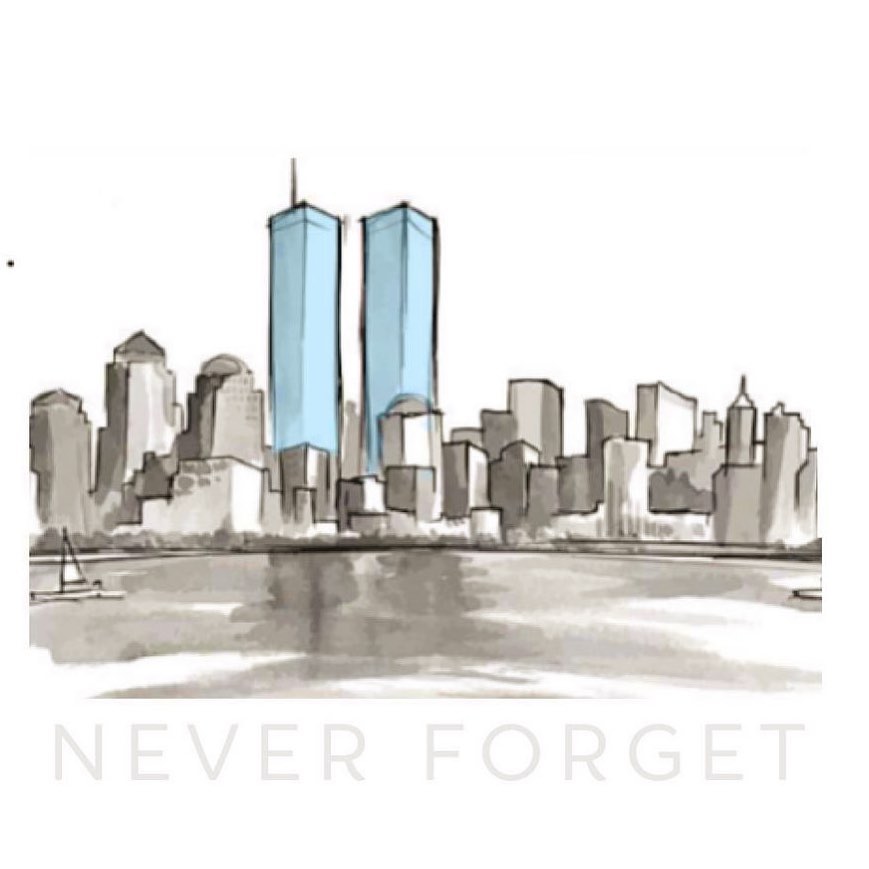
I was in Manhattan on September 11, 2001. I was living in an abusive marriage to a mentally unstable, and very scary man. That day was terrifying, and he was even more terrifying. It’s hard to talk about it, because it was just too much. The tricky thing about trauma is that it screws with your memory, and the truth is that I’ve not had it in me to try to face them. I buried that day within me while it was still alive.
It’s been 20 years. My first baby was one years old in 2001, he’s now a 21 year old young man. What I can share today, is a window into how trauma presents itself, even after 20 years: I am numb. I can’t turn on the radio or tv because I cannot bare to hear a word about it. I have a heavy sob stuck in the center of my chest and I am terrified to let it out, but I desperately want to. AlI I want to do is forget, and leave it buried. But we can’t forget can we? Nor should we, people deserve to be honored. There is a film reel playing all the time in my mind. I cannot stop it, because I cannot access it. Perhaps one day I will be ready to. Perhaps I won’t.
There was not a cloud in the sky on that crisp September day. We had no idea what was coming when the bottom dropped out. It felt like the city crumbled around me. We were a city of zombies, everyone in shock. I have yet to process what happened, but once a year I am reminded that I need to. Maybe one day I will be able to speak more about it, just not this day. To those of you who were personally touched or lost loved ones, parents, friends, and colleagues I send you my love. It is my belief that the 2,997 that died that beautiful September day are dancing in another realm, untethered from the weight of their human bodies.
Today was a hard day for so many, but we survived.




 Rebel Thriver