
The hidden truths of domestic violence and the cost of silence.
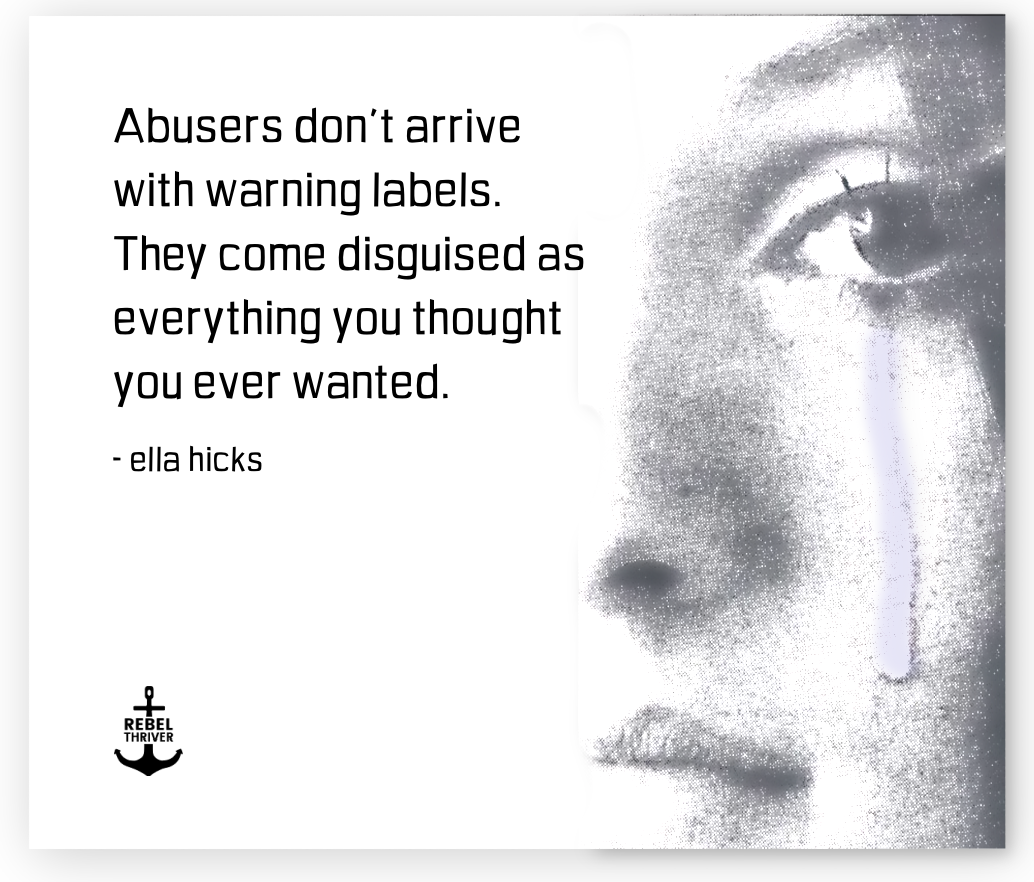
Abusers don’t arrive with warning labels. No red horns. No cape. They come disguised as everything you thought you ever wanted. That is the hardest truth about domestic abuse. It does not announce itself. It hides in kindness, in charm, in morality — in the very qualities that make outsiders admire them while the victim begins to doubt herself.
At first it feels intoxicating. A flood of late night love messages. Constant attention. Lavish gifts. Promises of the future you once dreamed of. All of it becomes a blinder to the truth. These relationships often get serious very quickly, making it nearly impossible to hold onto healthy boundaries. The abuser studies what you need and feeds it back to you as confirmation. This has a name: love bombing.
It looks like generosity and grand gestures before trust has had time to grow. It sounds like forever talk from someone you barely know. Your nervous system reads the intensity as safety because acceptance like this can feel like home. You feel seen, heard, and held — possibly for the first time in your life. That is what makes it so powerful. But it is not love. It is conditioning. It is bait in the trap.
Once the hook is in, the mask begins to slip. Control creeps in quietly at first. A jealous comment disguised as concern. A demand dressed up as protection. The cycle of abuse has begun, and it follows a pattern so many survivors come to know: tension, explosion, honeymoon.
Tension builds in small, relentless ways. Criticism. The silent treatment. The constant need to walk on eggshells to ward off the inevitable. Your body learns to scan for danger in every word and gesture. Then the explosion comes. It may be a night of insults meant to strip your worth. It may be a shove, a slap, or worse. Whatever form it takes, the explosion is designed to catch you off guard and break you down.
And then, the honeymoon. Apologies. Tears. Promises of change. Begging. The relief is palpable. For a moment, you want to believe he can return to the man you first met. This rhythm is deliberate. It conditions your nervous system to live in hyper vigilance while clinging to the rare scraps of kindness. The cycle itself becomes a cage — one built not of bars, but of hope. And hope is what keeps you tethered to the source of harm.
Living inside this cycle of emotional upheaval rewires the body. The nervous system is built to protect us, but when it is forced to stay on constant high alert, it becomes dysregulated. Your body forgets how to return to a baseline of calm. The heart begins to pound without understanding the trigger. Every creak in the floorboards feels like a warning. The body braces for blows that may never come. Sleep is fractured. Even silence begins to sound like danger.
Over time, the flood of stress hormones carves new neural pathways in the brain, and survival becomes the body’s only language. The chemistry of abuse begins to mimic the chemistry of addiction.
This is why survivors often describe the bond with an abuser as impossible to break. The body craves not the abuse itself, but the temporary relief that comes in the honeymoon phase. Like a drug, it offers a rush of dopamine that feels like intense relief after deprivation. That craving is not a weakness. It is the body trying to make sense of chaos. It is biology responding exactly as it has been trained to do.
Even after escape, the damage does not simply reset. Recovery from domestic abuse is not a single event. It is a process as complex as substance recovery — with its own withdrawals, its own triggers, and the slow, patient work of teaching the body how to feel safe again.
The emotional, physical, and psychological toll does not stop with her. A mother who lives in constant fear can’t help but pass that fear to her children. When her nervous system is on high alert, theirs will be too. Babies learn safety through their mother’s gaze. The tone of her voice. The rhythm of her breath. When those cues are disrupted by abuse, a child’s sense of self and safety is shaken. They grow in sandy soil. Soil that never stops shifting.
A child who can’t trust the world to be safe cannot thrive. Instead, they adapt. Some withdraw into silence. Some lash out in anger. Some learn to tiptoe the same way their mother tiptoes, measuring every word against the possibility of eruption. Abuse fractures families. It teaches even the smallest ones to live in survival mode. To please. To disappear. This is the generational ripple of trauma from domestic violence. It does not stay contained in one person. It alters nervous systems. It shapes futures. It plants fear where the roots of safety should have been.
“Why doesn’t she just leave?”
This is the question asked most often, and it is the one that cuts the deepest. In simple terms, it is ignorance. It places the burden on the victim instead of the abuser, as though leaving were simple, as though safety were waiting just outside the door. But leaving is never simple. In fact, it is the most lethal time in an abusive relationship. Not only do women lose their lives inside abuse, but many lose them in the desperate attempt to escape it.
And for the record, women do try to leave. On average, it takes eight or nine attempts before she finds her way out—if she is so lucky. A trauma bond is a very real psychological phenomenon. The nervous system, conditioned by cycles of abuse and reconciliation, clings to the hope of the honeymoon phase the way an addict clings to the next fix. Add to that the threats of poverty, homelessness, losing children, or retaliation, and the so-called “choice” to leave becomes a dark labyrinth that feels impossible to even try to navigate.
For mothers, every step is measured not only for herself but for the children she must protect. Can you imagine anything more terrifying than trying to escape with small children? Now imagine what happens when they are caught.
So when someone asks, “Why didn’t she just leave?” the only answer is that she was already surviving in the most impossible circumstances. And even when she does leave, the story does not end. Abuse has a long reach. It does not vanish when the door slams shut or when divorce papers are signed. In fact, many women discover a whole new layer of danger after they leave. It has a name: post-separation abuse. The threats, the stalking, the attempts to control through the children or the courts — all of it is part of the same cycle of abuse. Leaving does not guarantee safety. For many, it is just the beginning of another phase of survival.
Post-separation abuse is devastating not only because of the external threats but because of what is happening inside her body. A nervous system that has lived in chaos does not know how to return to calm. Even when the abuser is gone, her body keeps waiting for the next explosion. Sleep is fractured. Trust feels impossible. Even joy can feel unsafe.
Recovering from domestic abuse mirrors recovery from addiction. The body craves what it has been trained to expect, not the violence itself, but the fleeting relief that comes in the honeymoon phase. That moment of forgiveness or reconciliation is like a hit of dopamine, a temporary high after deprivation. The brain learns to chase it long after the relationship is over. This is not a weakness. It is human neurobiology. Trauma carves its pathways deep, and healing requires rewiring them, step by fragile step.
This is why recovery is not an event but a process. It carries withdrawals, triggers, and the slow, patient work of teaching the body how to feel safe again. Without support, the risk of returning to the abuser or finding herself in another abusive relationship remains painfully high. Safety is not just leaving. Safety is learning how to live again.
Domestic violence is endemic. One in three women will experience it in her lifetime, and that number only reflects those who report. Most never do. Abuse thrives in silence. It thrives in a patriarchal culture that still tells women to sit down and be quiet, to endure, to forgive. A culture that insists the highest compliment a woman can earn is to be selfless.
Abuse thrives when neighbors hear the screams and turn up the television. It thrives when the justice system minimizes abuse (“just a little fight with the wife”), when funding for shelters is slashed, when headlines sensationalize the tragedy but ignore the pattern.
When an extreme case makes the news, people become outraged, but within days the outrage fades. The world forgets. Survivors do not have that luxury. Every silenced woman, every child who grows up afraid, carries the weight of that forgetting. Silence protects the abuser. Silence ensures the cycle continues. We cannot afford to look away. Domestic violence is not contained behind closed doors. It is a collective wound that touches every community and every generation.
Elie Wiesel, a Holocaust survivor, carried the memory of what happens when the world stays silent. His words were born of a greater atrocity, but they hold true here: “Neutrality helps the oppressor, never the victim. Silence encourages the tormentor, never the tormented.”
What do survivors need from us?
They need us to stand with them. To speak. To donate. To advocate. To hold space for the women who are still trapped inside it, for those clawing their way out, and for those trying to rebuild a life from the floor up. Survival is solitary, but healing is collective. Together we can break the silence. Together we can dismantle the systems that embolden abusers. Together we can show every survivor that she has worth.
Ella xx


 Rebel Thriver