What Happens When the World Turns Away?

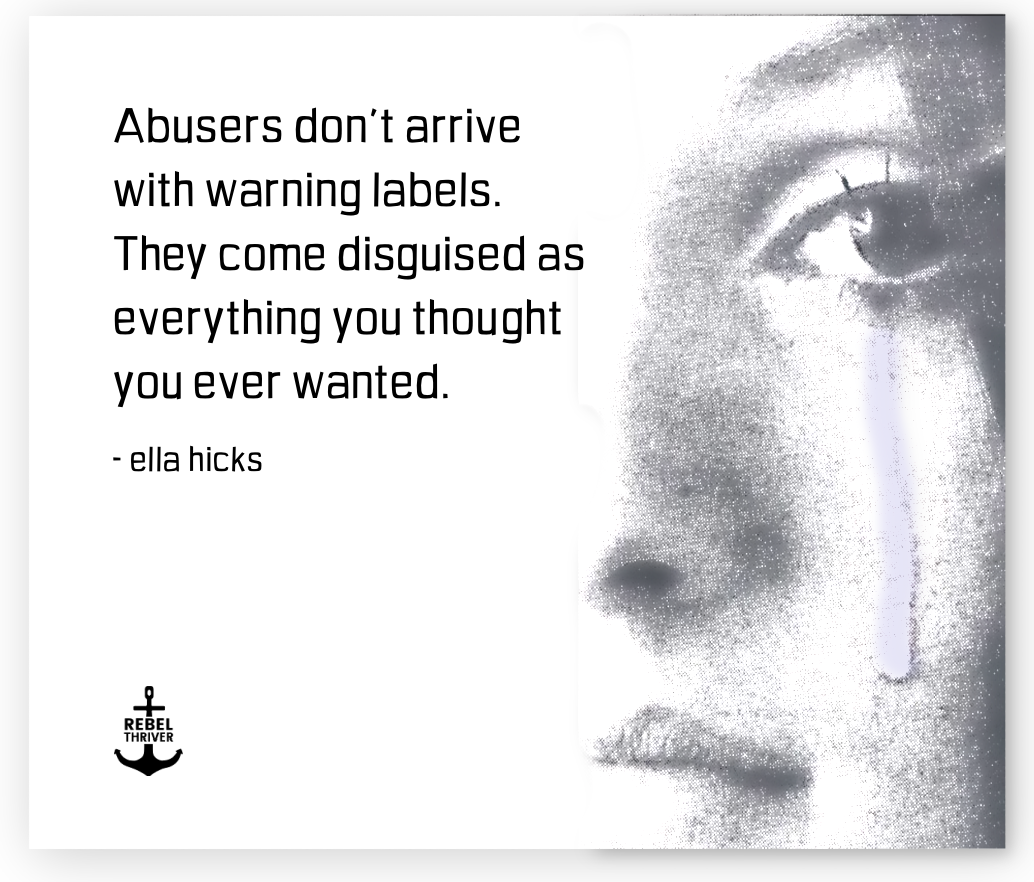
Abusers don’t arrive with warning labels. No red horns. No cape. They come disguised as everything you thought you ever wanted. That is the hardest truth about domestic abuse. It does not announce itself. It hides in kindness, in charm, in morality — in the very qualities that make outsiders admire them while the victim begins to doubt herself.

At first it feels intoxicating. A flood of late night love messages. Constant attention. Lavish gifts. Promises of the future you once dreamed of. All of it becomes a blinder to the truth. These relationships often get serious very quickly, making it nearly impossible to hold onto healthy boundaries. The abuser studies what you need and feeds it back to you as confirmation. This has a name: love bombing.

It looks like generosity and grand gestures before trust has had time to grow. It sounds like forever talk from someone you barely know. Your nervous system reads the intensity as safety because acceptance like this can feel like home. You feel seen, heard, and held — possibly for the first time in your life. That is what makes it so powerful. But it is not love. It is conditioning. It is bait in the trap.

Once the hook is in, the mask begins to slip. Control creeps in quietly at first. A jealous comment disguised as concern. A demand dressed up as protection. The cycle of abuse has begun, and it follows a pattern so many survivors come to know: tension, explosion, honeymoon.

Tension builds in small, relentless ways. Criticism. The silent treatment. The constant need to walk on eggshells to ward off the inevitable. Your body learns to scan for danger in every word and gesture. Then the explosion comes. It may be a night of insults meant to strip your worth. It may be a shove, a slap, or worse. Whatever form it takes, the explosion is designed to catch you off guard and break you down.

And then, the honeymoon. Apologies. Tears. Promises of change. Begging. The relief is palpable. For a moment, you want to believe he can return to the man you first met. This rhythm is deliberate. It conditions your nervous system to live in hyper vigilance while clinging to the rare scraps of kindness. The cycle itself becomes a cage — one built not of bars, but of hope. And hope is what keeps you tethered to the source of harm.

Living inside this cycle of emotional upheaval rewires the body. The nervous system is built to protect us, but when it is forced to stay on constant high alert, it becomes dysregulated. Your body forgets how to return to a baseline of calm. The heart begins to pound without understanding the trigger. Every creak in the floorboards feels like a warning. The body braces for blows that may never come. Sleep is fractured. Even silence begins to sound like danger.

Over time, the flood of stress hormones carves new neural pathways in the brain, and survival becomes the body’s only language. The chemistry of abuse begins to mimic the chemistry of addiction.

This is why survivors often describe the bond with an abuser as impossible to break. The body craves not the abuse itself, but the temporary relief that comes in the honeymoon phase. Like a drug, it offers a rush of dopamine that feels like intense relief after deprivation. That craving is not a weakness. It is the body trying to make sense of chaos. It is biology responding exactly as it has been trained to do.

Even after escape, the damage does not simply reset. Recovery from domestic abuse is not a single event. It is a process as complex as substance recovery — with its own withdrawals, its own triggers, and the slow, patient work of teaching the body how to feel safe again.

The emotional, physical, and psychological toll does not stop with her. A mother who lives in constant fear can’t help but pass that fear to her children. When her nervous system is on high alert, theirs will be too. Babies learn safety through their mother’s gaze. The tone of her voice. The rhythm of her breath. When those cues are disrupted by abuse, a child’s sense of self and safety is shaken. They grow in sandy soil. Soil that never stops shifting.

A child who can’t trust the world to be safe cannot thrive. Instead, they adapt. Some withdraw into silence. Some lash out in anger. Some learn to tiptoe the same way their mother tiptoes, measuring every word against the possibility of eruption. Abuse fractures families. It teaches even the smallest ones to live in survival mode. To please. To disappear. This is the generational ripple of trauma from domestic violence. It does not stay contained in one person. It alters nervous systems. It shapes futures. It plants fear where the roots of safety should have been.

“Why doesn’t she just leave?”

This is the question asked most often, and it is the one that cuts the deepest. In simple terms, it is ignorance. It places the burden on the victim instead of the abuser, as though leaving were simple, as though safety were waiting just outside the door. But leaving is never simple. In fact, it is the most lethal time in an abusive relationship. Not only do women lose their lives inside abuse, but many lose them in the desperate attempt to escape it.

And for the record, women do try to leave. On average, it takes eight or nine attempts before she finds her way out—if she is so lucky. A trauma bond is a very real psychological phenomenon. The nervous system, conditioned by cycles of abuse and reconciliation, clings to the hope of the honeymoon phase the way an addict clings to the next fix. Add to that the threats of poverty, homelessness, losing children, or retaliation, and the so-called “choice” to leave becomes a dark labyrinth that feels impossible to even try to navigate.

For mothers, every step is measured not only for herself but for the children she must protect. Can you imagine anything more terrifying than trying to escape with small children? Now imagine what happens when they are caught.

So when someone asks, “Why didn’t she just leave?” the only answer is that she was already surviving in the most impossible circumstances. And even when she does leave, the story does not end. Abuse has a long reach. It does not vanish when the door slams shut or when divorce papers are signed. In fact, many women discover a whole new layer of danger after they leave. It has a name: post-separation abuse. The threats, the stalking, the attempts to control through the children or the courts — all of it is part of the same cycle of abuse. Leaving does not guarantee safety. For many, it is just the beginning of another phase of survival.

Post-separation abuse is devastating not only because of the external threats but because of what is happening inside her body. A nervous system that has lived in chaos does not know how to return to calm. Even when the abuser is gone, her body keeps waiting for the next explosion. Sleep is fractured. Trust feels impossible. Even joy can feel unsafe.

Recovering from domestic abuse mirrors recovery from addiction. The body craves what it has been trained to expect, not the violence itself, but the fleeting relief that comes in the honeymoon phase. That moment of forgiveness or reconciliation is like a hit of dopamine, a temporary high after deprivation. The brain learns to chase it long after the relationship is over. This is not a weakness. It is human neurobiology. Trauma carves its pathways deep, and healing requires rewiring them, step by fragile step.

This is why recovery is not an event but a process. It carries withdrawals, triggers, and the slow, patient work of teaching the body how to feel safe again. Without support, the risk of returning to the abuser or finding herself in another abusive relationship remains painfully high. Safety is not just leaving. Safety is learning how to live again.

Domestic violence is endemic. One in three women will experience it in her lifetime, and that number only reflects those who report. Most never do. Abuse thrives in silence. It thrives in a patriarchal culture that still tells women to sit down and be quiet, to endure, to forgive. A culture that insists the highest compliment a woman can earn is to be selfless.

Abuse thrives when neighbors hear the screams and turn up the television. It thrives when the justice system minimizes abuse (“just a little fight with the wife”), when funding for shelters is slashed, when headlines sensationalize the tragedy but ignore the pattern.

When an extreme case makes the news, people become outraged, but within days the outrage fades. The world forgets. Survivors do not have that luxury. Every silenced woman, every child who grows up afraid, carries the weight of that forgetting. Silence protects the abuser. Silence ensures the cycle continues. We cannot afford to look away. Domestic violence is not contained behind closed doors. It is a collective wound that touches every community and every generation.

Elie Wiesel, a Holocaust survivor, carried the memory of what happens when the world stays silent. His words were born of a greater atrocity, but they hold true here: “Neutrality helps the oppressor, never the victim. Silence encourages the tormentor, never the tormented.”

What do survivors need from us?

They need us to stand with them. To speak. To donate. To advocate. To hold space for the women who are still trapped inside it, for those clawing their way out, and for those trying to rebuild a life from the floor up. Survival is solitary, but healing is collective. Together we can break the silence. Together we can dismantle the systems that embolden abusers. Together we can show every survivor that she has worth.

Ella xx
Buckle Up

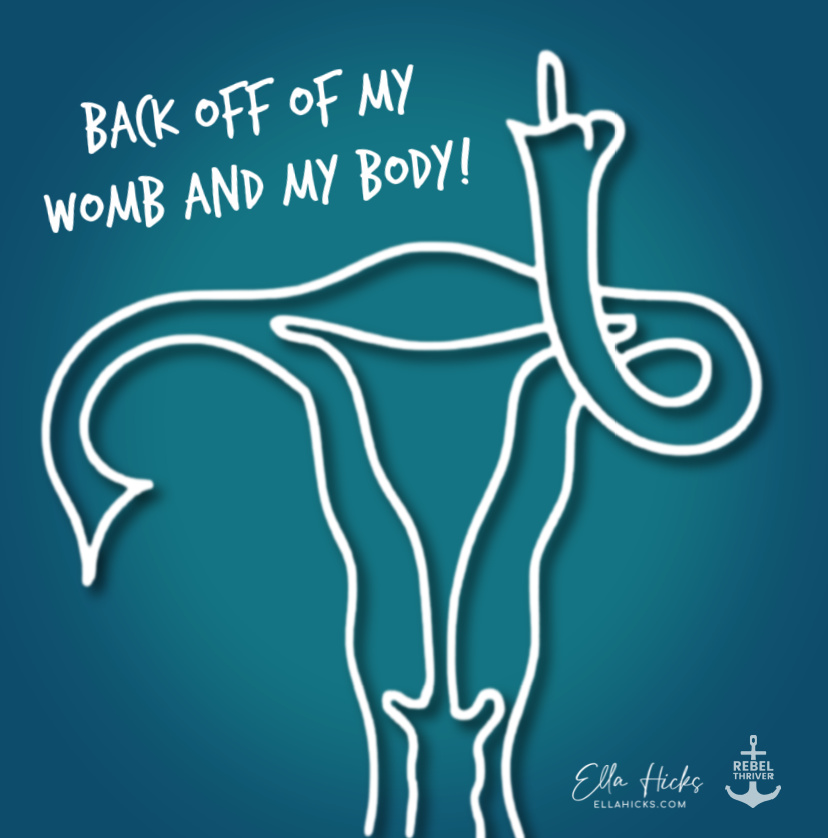
I find myself at a loss of words over the Supreme Court decision that in short tells women what they can and cannot do to their bodies. Oh, and basically deputizes citizens to turn in their neighbors. It feels like we are in 1942 Germany or in the Soviet Union in the 1980’s. I have dedicated my life to working with women. I help them find their path to healing and I help them find their voices. What happened today pushes back against all of this. It’s a push back against women themselves. There are a lot of ways I could write on this subject, but I’ve decided to tell you my story, what I have learned, and what I know.

I was raised in a born again Christian household where we were forced to go to prayer meetings, church, etc. During my middle school and teenage years I watched as my parents marriage changed as a result. My father became even more controlling than he already was, my mother more submissive, and as a result, unhappy children. This was a formative time for me because I learned exactly the kind of parent I did not want to be.

When I was 15, and still a virgin, I was raped. I was traumatized and terrified, but I couldn’t tell my parents. What if I was pregnant? They were so pro life that I knew they wouldn’t be on my side in this situation. When I finally got my period I was beyond relieved. I then proceed to promptly stuff that memory into a dark corner of my mind, and I kept going. At 22 I decided to finally tell my mother about it. She ended up breaking down and took to her bed for 3 days. She cried and begged me for forgiveness. She wanted to know why I didn’t just tell her. Then she made me promise that we would never tell my father because it would kill him. Imagine if I had been impregnated? What then? I stuffed it back into the dark corners of my mind, and went about the business of living the best I could.

When I was in my mid twenties I met a guy. Our worlds collided and we fell madly and deeply in love, and got married. This is where it gets a little more personal. I have always had an unpredictable menstrual cycle. Sometimes I won’t get it for months, and then there are times when I have it for months. It’s just how it’s always been. I had an amazing career, and I made good money, so we decided not to use birth control. After 5 years of marriage I finally got pregnant. I didn’t know I was pregnant until I was 7-8 weeks pregnant because I continued to have my period. In fact, I had my period for the entire first trimester for both of my kids. I had NO IDEA I was pregnant at 6 weeks with either of them.

We were married for a total of 11 years and during this time my career was exploding, but my marriage was crumbling. I was being abused by my husband. Now just to explain a little about domestic violence…it is not a straight line. You live in a cycle of abuse. There is a period of time where the tension is so thick you can cut it with a knife. You walk on eggshells, and try to avoid the tension from building, but no matter what you do it inevitably leads to an explosion. Abuse is abuse. Period. To those of you who are wondering if you are being abused because you haven’t been hit yet, the answer is if you are feeling it then most likely you are. Don’t use physical abuse as the benchmark for getting help. Now back to the cycle. After the explosion of abuse there is a period of calm much like after a big storm. This is when the Honeymoon phase begins. The abuser will love bomb you to try to smooth things over. They will tell you what you want to hear. You are so exhausted by this point that you are just grateful for the peace, and you promise yourself that there won’t be a next time, but here always is. I was married to Jekyll and Hyde. As evil as he could be one day, he could also be the amazingly intelligent and funny man I fell in love with. It got to the point that I didn’t know who I would be talking to on any given day.

Over the next 5 years while living in the exhausting and chaotic cycle of violence I became pregnant a couple more times, but I miscarried. I desperately wanted more children. When I finally did get pregnant again I didn’t know until after 6 weeks, because I continued to menstruate. At about the three month mark into the pregnancy, Mr. Hyde showed up and decided to kick Dr. Jekyll out for good, and took up full residence in our home. This is when the nature of the abuse took a turn; I was being abused while pregnant. I was having a hard time gaining weight, I couldn’t sleep, and I was trying so hard to keep the peace. My baby came early as a result of the abuse. It was if he couldn’t tolerate another moment inside of my traumatized body. It was during this pregnancy that I accepted the truth about my situation. I needed to get out, but how?

The next two years my life were a living hell. I was a nervous wreck. I went from a size 10 to a 2, and didn’t even realize it. It was during this time where my personal rights were challenged. I was isolated from my friends and family. The only thing I was truly allowed to do was work, and as a result it became my salvation. Someone had to make money and it certainly wasn’t going to be him. He was a nasty drunk most nights. He threatened me with his fist, and a big old butcher knife. I woke up with his hands around my neck so he could tell me that he could, “snuff the life out of me”. It was bad. It was intensifying, and he was threatening to hurt my mother. He told me that he would never let me leave him and take the kids, that he would rather take them out of this world. That is why I stayed until that one miraculous night when the opportunity presented itself, the door opened, and I ran through it as fast as I could with a baby on each hip.

I have never been in a situation where I have had to really consider an abortion. But I know that I would have wanted that option after the rape (even though I know my parents would have made me have it and put it up for adoption). I have experienced the loss of my freedom. First as a kid in a conservative Christian home, and then as an abused spouse. It wasn’t until I lost my freedom as an adult that I realized how precious it was. I was caged and I wasn’t allowed to make decisions for myself. It’s not hard to understand why my favorite word is freedom.

What has happened in Texas is terrifying. I feel like it is the beginning of Gilead (Handmaid’s Tale reference). There are over 29 million people living in Texas and 50% of them are women. The other 50% is made up approximately of 74% white men. (1) For me this is not just about the right to choose, because that is just a boundary that they will attempt to push out again in order to take more rights from women. As a survivor of abuse this feels all sorts of wrong, and I know this is triggering many other women survivors. No one has a right to take away your choices for your own body. And it is especially worrisome that the majority of men that are doing this in Texas are white. What’s it going to be next? What state is going to follow suit?

Women who have money and seek an abortion in Texas will be inconvenienced by having to go to another state. Women who do not have a means will have children that they are not emotionally or financially prepared to care for. Women who are in abusive relationships that are repeatedly raped will have no recourse. It’s hard enough trying to get out of an abusive relationship, but the more kids you have the harder it will be. Do you see where I am going with this? In the state of Texas they have been fighting for their rights against mask mandates, but they think it is okay for the government to tell a woman what she can or cannot do with her own body.

It sounds just like abuse, but now the government is taking a piece of the action. Women should have guaranteed dominion over their own bodies. Full stop. If this is taken away then women are not free in this country, and women of color will have it all the more harder. This is resoundingly unacceptable for all women, regardless if they are pro-choice or pro-life. And on that note I want to remind you that the Violence Against Women Act (VAWA) is sitting on Mitch McConnell’s desk collecting dust. Without the protection of this law women are at risk. My understanding is that the hold up is over gun rights. They added into the law that anyone found guilty of domestic violence will lose their right to have a gun. Imagine that?


One in four women will experience domestic violence in their life. The Domestic Violence Hotline receives over 20K calls a day in the USA. (2) Over half of all intimate partner homicides are committed with a gun. A woman is 5x more likely to be murdered when her abuser has access to a gun. In order to protect women and reduce the homicide rates for domestic violence we must insure that people who abuse their partners or family do not have access to firearms. (3) Again, this is just another example of women losing their freedom because men are not willing to give up control.

I am very scared about what is going to happen after this. I am scared for the women who live in other states because you know it’s only a matter of time before similar laws are passed in them. Women are not confused. We do not need men (or Amy Coney Barrett) to tell us how to take care of our own bodies. They don’t want to wear masks, they don’t want us to take away their guns, but they want to take away a woman’s right to decide what is right for her own body. This is the Patriarchy in all its white glory. It will continue to do what it needs to in order to retain power and hold all women and men of color back.

I’m thinking of moving north. If I see Handmaids in their red capes walking north in orderly lines from the south I want to be able to run across the border to Canada. Just as all the Anti-maskers in Texas are crying “My Body, My Choice, My Rights”, so are women shouting the same thing, but apparently no one gives a shit about that.

(1) Census.gov
(2) thehotline.org
(3) efsgv.org

Empty House

“I began to shiver. There was a wind blowing through me; I felt like an empty room with all the windows shattered, terror blowing through me, no comfort left. That was how I felt consciously and distinctly.” – Frederic Prokosch

This is how domestic violence feels at times. It guts you and leaves you feeling utterly alone and isolated. A shell of your former self. There is no comfort to be found in it and when you do find a moment of peace you are always preoccupied with the fear of it ending. You are never able to fully relax. To experience the relief of being able to collapse into yourself. No fear. No worries. You are on guard and vigilant 24/7, walking on eggshells and always praying that it won’t happen again. But it does. It always happens again. This is the cycle of violence and what makes it so incendiary is that it always circles back on itself. It runs deeply infecting one generation to another. Unless the cycle is broken.
.
The road back is not an easy one. It is riddled with road mines and much strife. But we the survivors are strong and must never forget to celebrate that. Freedom becomes our favorite word and courage our middle name. Day after day you must take steps forward and find support that you can lean into. Find role models of women who have walked your path before you and who inspire you. The path to healing is where you will learn to rebuild yourself on a solid foundation and begin the process of discovering who you are again. No longer will you feel like an empty house with shattered windows. Instead, you will feel a fire rising up within you declaring that you are worthy of so much more. You are so very worth the effort it will take to rebuild. You deserve a peaceful happy life. Healing takes time so you must tend to your garden with much love and self care. 🦋Ella
.
Domestic Violence Hotline: 800-799-7233 (United States)
The hotline.org
.
✨ If you are interested in life coaching please reach out to me at Ellahickscoaching@gmail.com or you can get more info and book your sessions at ellahicks.com.

Tribute


I haven’t been able to write for a very long time. In part it’s due to being thoroughly immersed with my children, two masterminds, classes, and work. I just didn’t have the band width to focus on writing, although every inch of me desired to ooze out into words what I have been feeling. Much of this past year has been about me wrapping up the past and focusing on moving forward. I am laying new foundations and creating new dreams for my life. This has been a time of healing.

After leaving my abusive marriage I was completely disconnected from myself. I really had no idea who I had become or if I was anyone at all. My ex-husband left me a shell of my former self. I did the best that I could to be a single mom to my kids as I navigated the financial turmoil of a divorce while leaving behind a six figure salary for welfare. But, it was in the midst of all of this chaos that Rebel Thriver was born. In fact, it was born shortly after I lost one of the most important people in my life.

Roger Price St. John came into my life three years after I left my marriage. It started out as a professional friendship, but very quickly became more. He was the most interesting, creative, and intelligent man that I had met in a very long time. A recovered addict (14 years) who always supported others in the program. He worked the steps, donated his time for working the hotlines on holidays, and was a sponsor. He knew that good support was key in being able to make it through to the other side of recovery. Which is why it was so incredibly heart wrenchingly hard that he died of an overdose.

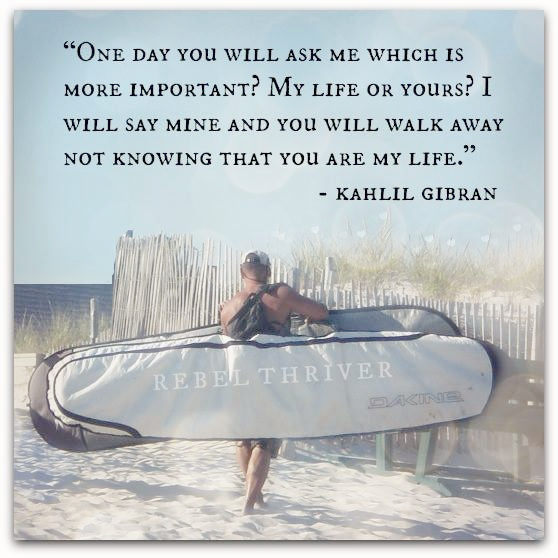
He was a teacher at a local college, film maker, Billabong surf camp photographer, frequent volunteer, and he ran his own non-profit surf camp that benefited needy kids in Costa Rica. Both of us artists we shared a love of photography, surfing, Pablo Neruda, and my children. After a long Summer beach day of surfing and family, he got down on one knee and proposed to me on the top of the sand dunes. The Atlantic bore witness.

I never got to marry Roger. About seven months later, after getting very sick with bronchitis, he relapsed. His doctor prescribed him cough syrup with Codeine and that was the beginning of the end. I had no idea what was coming down the pike when I saw him taking a chug of that cough medicine straight out of the bottle. Within a month he was barely functioning or even recognizable to me for that matter. The once fit and vibrant man who could tread water forever just to get the perfect picture of someone surfing out of a wave could barely shuffle his feet to get from point A to point B now. What the hell had happened? When he showed up to my home barely coherent I wouldn’t let him in. That was the last time he saw the kids, who by this time had already started to call him “dad”. And just like that he slipped away.

I watched Roger fall deeper and deeper into his addiction. The “monster”, as he called it, had laid siege and taken over. He lost his job, ended up in jail, and a psychiatric hospital before overdosing. It had been only thirteen months since he had proposed to me and only seven months after falling face first off the wagon. It was intense and it all seemed to happen at once. I was not in the head space to take this on. I was still healing from my 11 year failed marriage with a man who was mentally unstable and violently abusive. It was more than I was equipped to handle. Roger Price St. John was gone.


Writing became the outlet for my sadness, which in turn gave birth to Rebel Thriver. I started writing this blog in hopes of connecting with someone else who might have been feeling as lost as I did. If that was even possible. I never expected the response would be so great! I quickly found out that there were many other women from around the world who were in a similar place as I was. We were all trying our best to survive as we walked through that liminal space following the death of a relationship. The space of no longer and not quite yet.

Many people never get to experience true love, but I certainly did. I loved my husband with all of my heart, and it shattered into a million tiny little pieces when I had to leave him. Even though he was severely damaged before I met him, I felt like I had failed him. Roger came into my life when I believed that I would never be able to love again. He met me where I was and held a safe space for me on my path to recovery from abuse. In the end, I felt like I had failed Roger too. I had loved two incredible men, and lost both of them.

This week marks the eighth Anniversary of Roger’s death. I cannot believe that so much time has passed. He is still very much with me, and I could give you example after example of how he stays in touch; his sense of humor intact. He walks with me on the beach everyday and that gives me great comfort. Roger gave me the greatest gift that he could, love. He showed me that my heart had the capacity to love again after it had been shattered. He led me out of the darkness, into the light, and inspired my life’s work. This incredible man showed me that my heart will never stop expanding. And so on this eighth anniversary of his death my heart breaks open a little wider and my love grows a little deeper.

This is my tribute.
This is my love song. xo Ella